
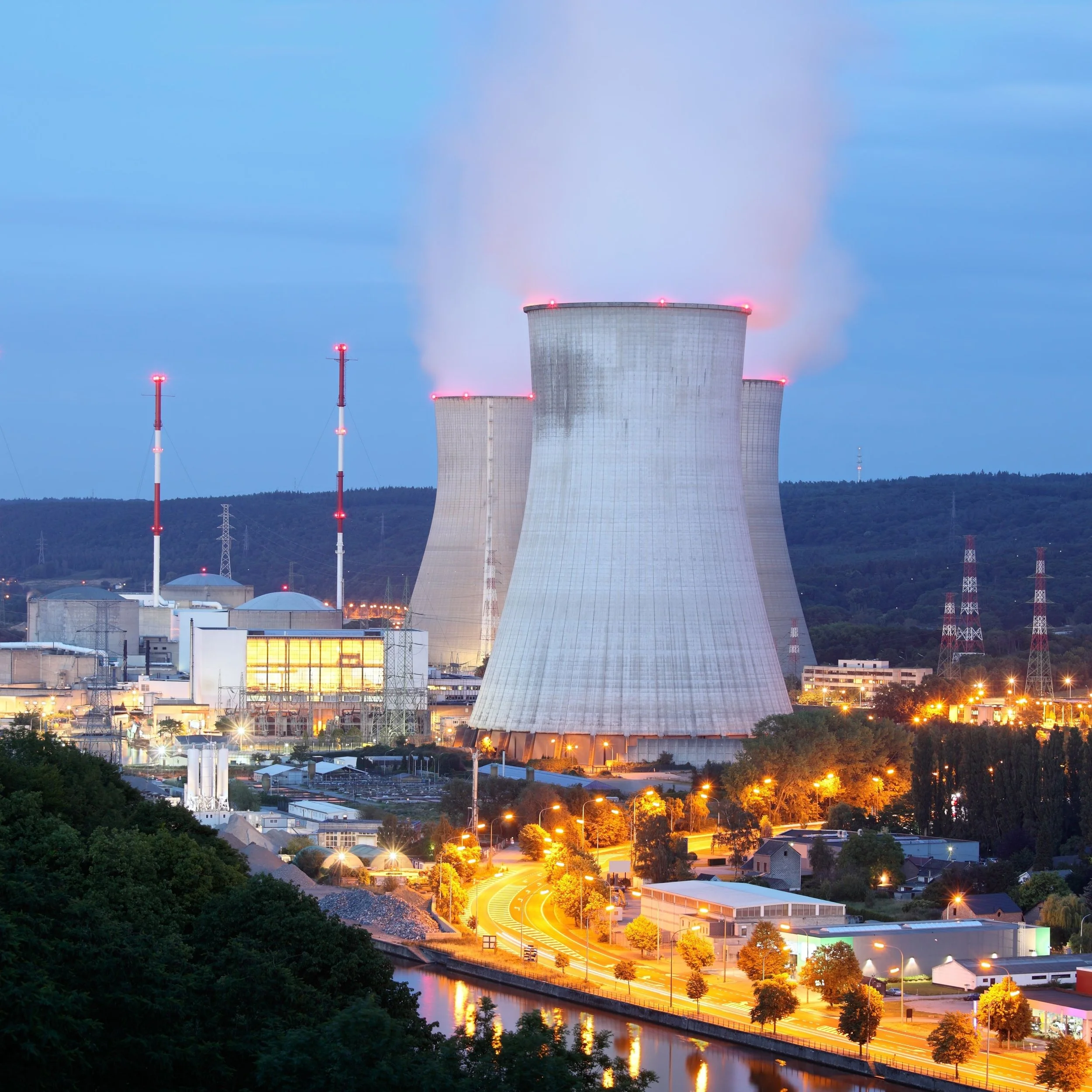
Emergency Preparedness for Organisations Near Nuclear Sites
If a major incident occurred near your site, would your organisation be ready to respond?
We provide practical crisis planning for businesses operating close to high-hazard infrastructure.
Across the UK, many organisations operate close to major nuclear facilities. These include civil nuclear power stations, nuclear research centres, and defence facilities such as the Atomic Weapons Establishment (AWE).
While nuclear facilities operate under extremely strict safety controls, national regulations require detailed emergency planning for the unlikely event of a major incident.
Organisations located near these facilities should understand how such an incident could affect their staff, operations and access to their sites.
Jennings Consulting supports organisations in strengthening emergency preparedness, crisis management and operational resilience where operations intersect with nuclear infrastructure.

Nuclear Sites Across the UK
The UK hosts a number of major nuclear facilities, each surrounded by emergency planning zones coordinated by local authorities.
Examples include:
Civil nuclear sites: Hinkley Point (Somerset), Sizewell (Suffolk), Sellafield (Cumbria), Hartlepool Power Station (Teesside), Heysham Power Stations (Lancashire), Dungeness (Kent).
Defence and nuclear research facilities: Atomic Weapons Establishment (AWE) Aldermaston, AWE Burghfield, Rolls-Royce nuclear propulsion facility (Derby), Devonport Naval Base (Plymouth).
These sites support critical national infrastructure and operate under strict regulatory frameworks. Local authorities maintain emergency plans covering surrounding communities and organisations.

The Atomic Weapons Establishment (AWE)
The Atomic Weapons Establishment operates two major sites in Berkshire:
AWE Aldermaston
AWE Burghfield
Both sites are located within the Reading–Tadley–Burghfield corridor and are surrounded by established business parks, industrial estates and logistics facilities.
Areas including Aldermaston, Tadley, Burghfield, Mortimer and Theale sit close to these sites.
Businesses operating in these areas may need to consider how they would respond if authorities issued emergency instructions affecting access to their facilities or the movement of employees.

How we help
Jennings Consulting specialises in strengthening organisational capability to respond to major incidents.
Support typically includes:
Emergency preparedness reviews
Independent assessment of existing emergency and continuity arrangements.
Crisis management frameworks
Clarifying leadership roles, decision structures and communication protocols.
Incident command training
Helping leadership teams understand how to manage complex incidents.
Scenario exercises
Facilitated exercises designed to test plans under realistic conditions.
Operational resilience planning
Ensuring organisations can continue operating under disruption.
The aim is to ensure that emergency plans are practical, understood and executable.
-
Organisations operating near nuclear infrastructure often include:
engineering and manufacturing companies
logistics and distribution centres
laboratories and pharmaceutical facilities
technology companies and data centres
large corporate offices
defence or infrastructure suppliers
Many organisations in business parks near nuclear facilities may not realise how external incidents could affect their operations.
-
Even where organisations are not directly regulated by nuclear authorities, proximity to a high-hazard site creates specific operational risks.
These may include:
restricted access to sites during an incident
disruption to transport routes
temporary evacuation or shelter instructions
workforce displacement
communication challenges with employees and contractors
operational downtime
Organisations with large workforces or critical operations benefit from ensuring that emergency planning is realistic and operationally practical.
-
Many organisations already have documentation labelled:
Business Continuity Plan
Emergency Response Procedure
Crisis Management Plan
However, these plans often focus on internal incidents such as fire, IT failure or severe weather.
Major external events introduce additional challenges, including:
rapid decision making under uncertainty
coordination with public authorities
managing employee safety across multiple locations
maintaining operations if staff cannot access a facility
Without testing these scenarios, organisations cannot be confident their plans would work in practice.
-
Organisations operating near high-hazard infrastructure should be able to answer the following questions clearly.
Do we know whether our site sits near a nuclear facility or within an emergency planning zone?
Who leads our organisation during a major external incident?
How would we communicate with employees within minutes of receiving official instructions?
Could our operations continue if staff could not access the site for 24–48 hours?
Has our emergency response plan ever been tested through a realistic exercise?
If these questions are difficult to answer, reviewing current arrangements can help identify practical improvements.
-
Around each nuclear site, local authorities define detailed emergency planning zones.
Within these areas, emergency services and public authorities coordinate plans to protect the public should an incident occur.
These zones typically include:
business parks
manufacturing facilities
logistics hubs
laboratories
office campuses
For example, areas around Reading, Theale, Tadley and Aldermaston fall within the planning zones for the Atomic Weapons Establishment (AWE).
Organisations operating in these areas may need to understand how their operations would respond to emergency instructions from authorities.
-
Organisations do not need complex programmes to strengthen preparedness.
Often the most effective actions include:
reviewing emergency and business continuity documentation
clarifying leadership roles during an incident
establishing clear communication protocols
running tabletop exercises with senior leaders
ensuring plans reflect realistic operational constraints
Testing plans through simple exercises often reveals issues that documentation alone does not identify.
Request a Preparedness Discussion
If your organisation operates near a UK nuclear facility or an Atomic Weapons Establishment (AWE), it may be helpful to review whether current emergency planning arrangements are sufficient.
Jennings Consulting works with organisations that want practical, operationally realistic preparedness planning.
Get in touch to see how we can help.